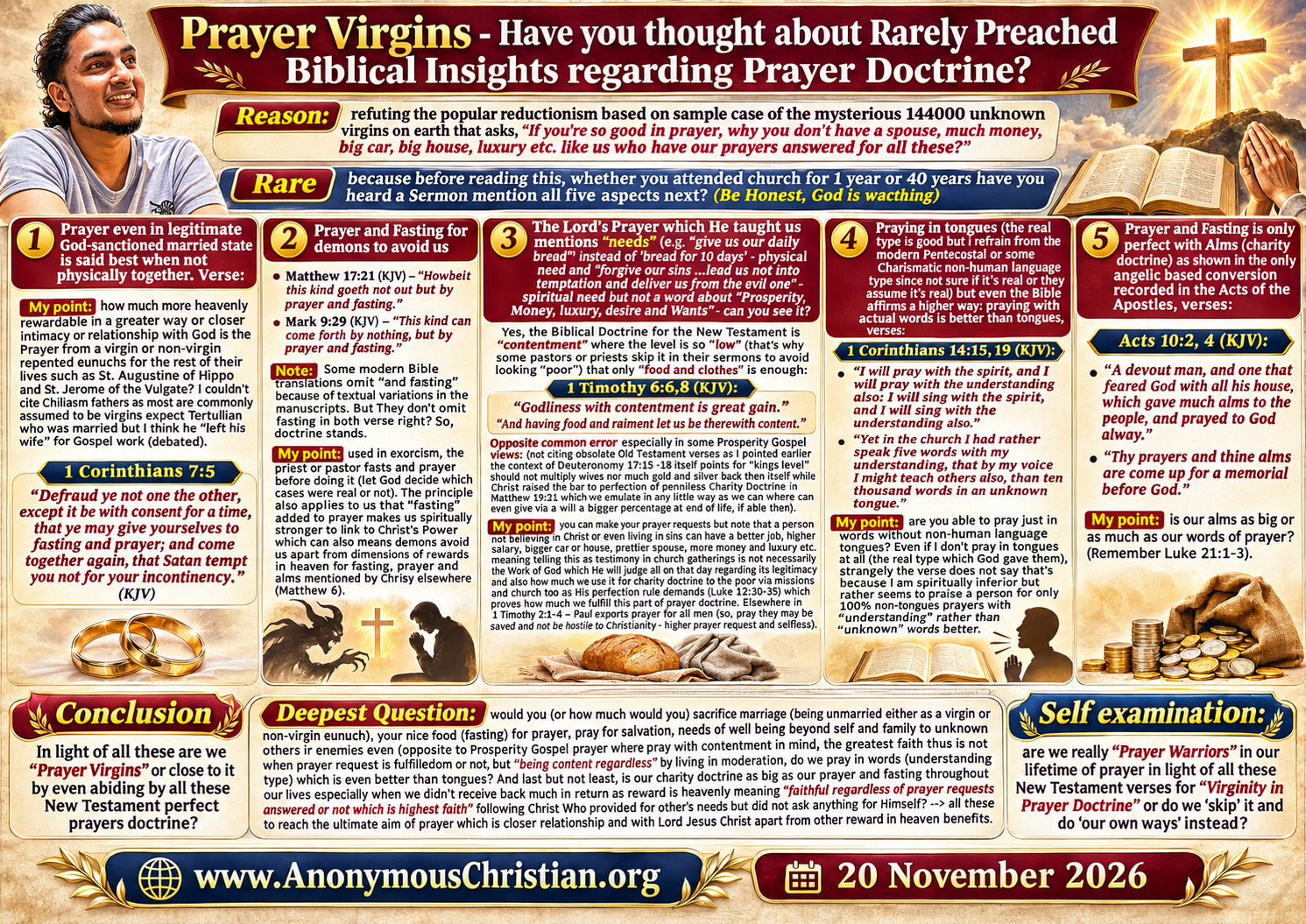
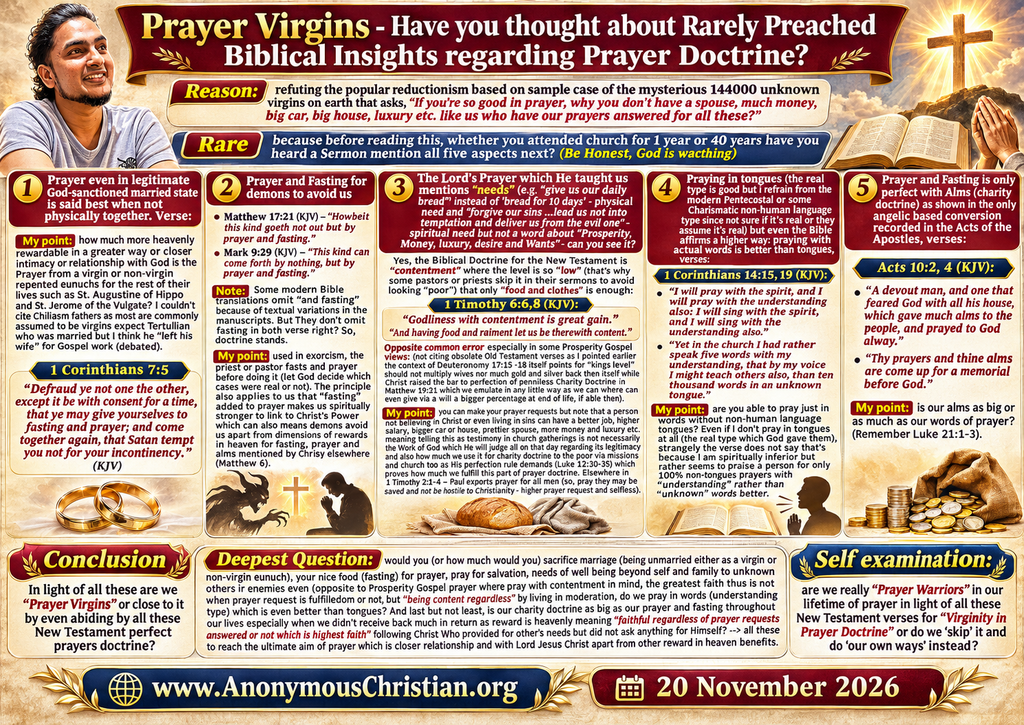
Prayer Virgins — Have You Thought About Rarely Preached Biblical Insights Regarding Prayer Doctrine?
www.AnonymousChristian.org | 20 November 2026
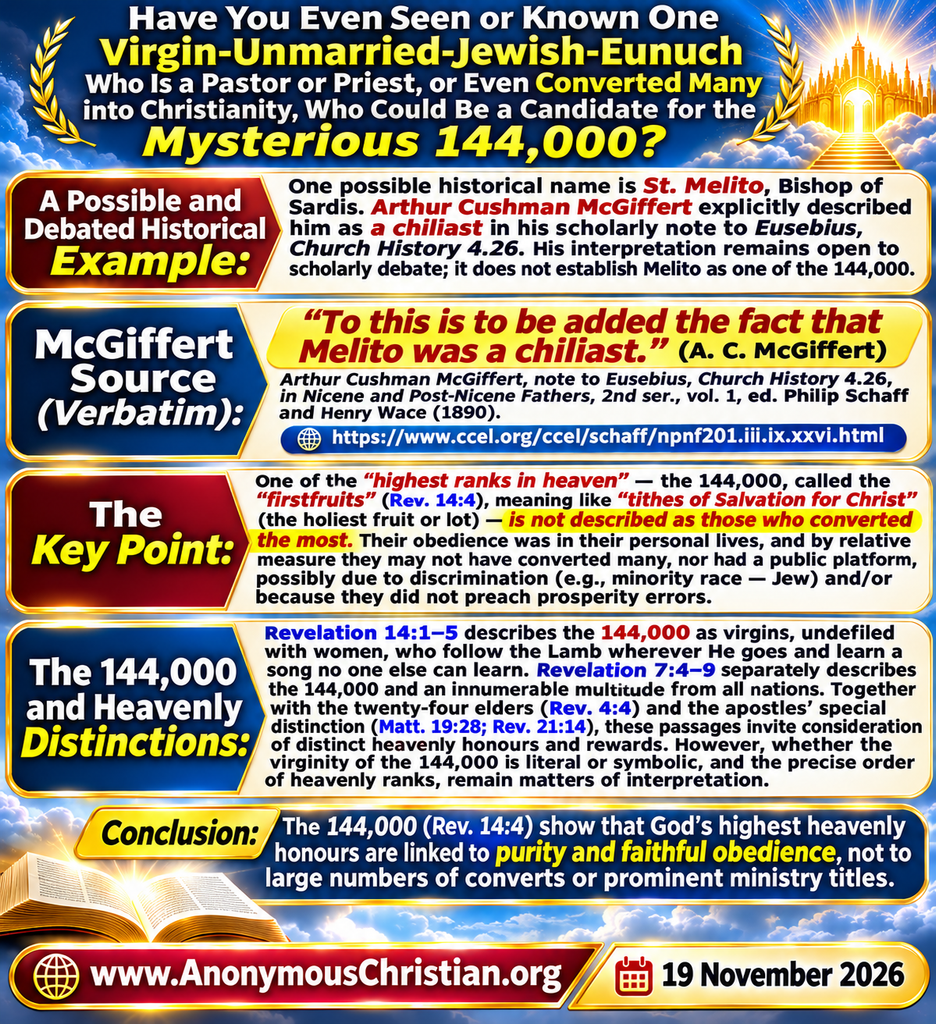
This reflection proposes “Prayer Virgins” as an authorial expression for examining the unity of prayer, contentment, voluntary celibacy, fasting, understanding, and almsgiving. It is offered as an invitation to self-examination, not as a judgment about any person’s prayer life, marriage, denomination, spiritual gifts, or heavenly status. The 144,000 of Revelation 14:1–5 are interpreted differently across Christian traditions; their description cannot by itself establish a universal ranking of believers.
Reason: Challenging a popular reductionism, using the illustrative case of the mysterious 144,000 virgins in Revelation, which asks:
“If you’re so good in prayer, why don’t you have a spouse, much money, a big car, a big house, luxury, etc., like us who have our prayers answered for all these?”
Rare because: Before reading this, whether you have attended church for 1 year or 40 years, have you heard a sermon mention all five aspects below together? (Be honest; God is watching.) The question is an invitation to personal self-examination, not an allegation about any preacher.
1) Prayer, Even in the Legitimate God-Sanctioned Married State, May Involve Spouses Temporarily Being Apart
1 Corinthians 7:5 (KJV)
“Defraud ye not one the other, except it be with consent for a time, that ye may give yourselves to fasting and prayer; and come together again, that Satan tempt you not for your incontinency.”
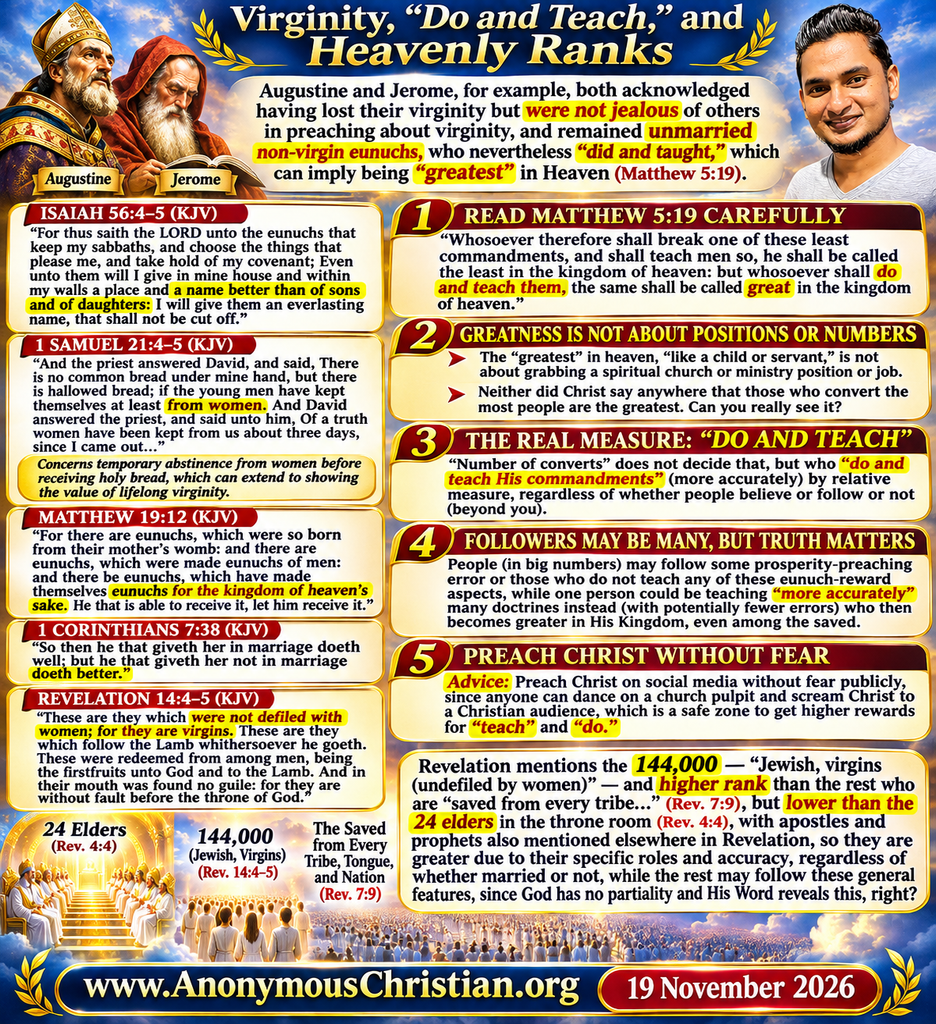
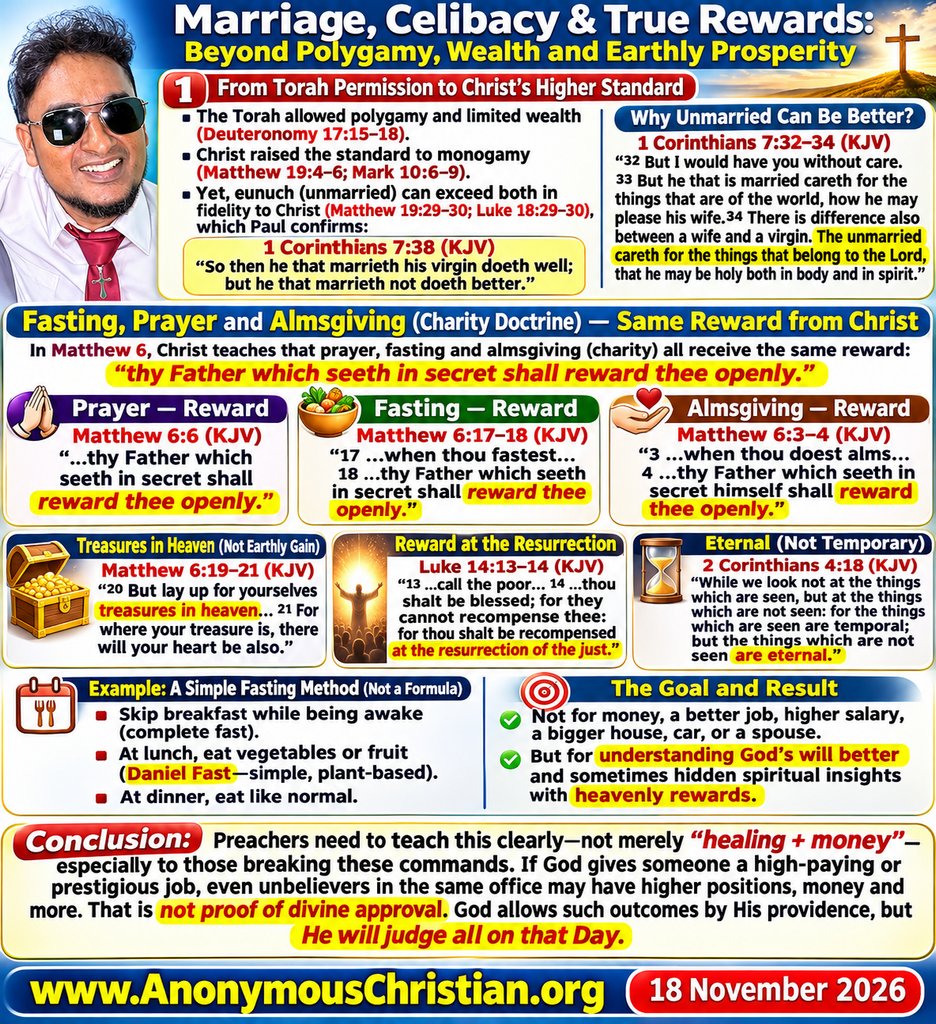
My point: How much more heavenly rewardable, in a greater way, or how much closer in intimacy or relationship with God, might the prayers of a virgin or a non-virgin, repentant eunuch who remains unmarried for the rest of life be, such as St. Augustine of Hippo after his conversion or St. Jerome of the Vulgate, an advocate of celibacy? Here “eunuch” is used in the sense of voluntary renunciation of marriage for the kingdom (Matthew 19:12), not necessarily a literal physical condition. Any claim of greater reward is a theological question, not a conclusion established by 1 Corinthians 7:5.
The passage itself concerns a temporary period of abstinence by mutual consent within marriage. It does not pronounce marital intimacy inferior or require celibacy of everyone; Paul explicitly recognizes distinct callings in 1 Corinthians 7:7–9, 32–35.
I could not reliably cite Chiliast Church Fathers for this point, as some are commonly assumed to have been virgins, except Tertullian, who was married. However, I have wondered whether he may have “left his wife” for Gospel work; that suggestion is debated and remains historically unverified.
2) Prayer and Fasting for Demons to Avoid Us — a Proposed Spiritual Application
Matthew 17:21 (KJV)
“Howbeit this kind goeth not out but by prayer and fasting.”
Mark 9:29 (KJV)
“This kind can come forth by nothing, but by prayer and fasting.”
Textual note: Some modern translations omit Matthew 17:21 entirely and omit “and fasting” from Mark 9:29 because of manuscript variants. Thus, it would not be correct to say that modern translations necessarily retain fasting in at least one of these two verses. The wider New Testament practice of fasting remains attested independently, for example in Matthew 6:16–18 and Acts 13:2–3.
My point: In some Christian traditions, a priest or pastor fasts and prays before an exorcism (let God decide which reported cases were real or not). The principle also applies to us as a theological possibility: adding fasting to prayer may strengthen our spiritual dependence upon Christ’s power, which may also be described as seeking protection against evil. Whether demons thereby avoid us cannot be guaranteed from these verses, and spiritual maturity is not measured by extraordinary experiences.
This is apart from the dimensions of heavenly rewards for fasting, prayer, and almsgiving, as mentioned by Christ elsewhere in Matthew 6. Their value is connected with sincerity and divine grace rather than a technique for compelling an outcome.
3) The Lord’s Prayer Teaches Needs, Not Prosperity, Money, Luxury, Desires, or Wants
The Lord’s Prayer, which He taught us (Matthew 6:9–13; Luke 11:2–4), emphasizes “needs”:
• Physical needs: “Give us this day our daily bread,” instead of asking for “bread for 10 days” as a measure of success. The wording emphasizes daily dependence, not a prohibition on responsible provision.
• Spiritual needs: “Forgive our sins … lead us not into temptation and deliver us from the evil one” (compare Luke 11:4 and Matthew 6:12–13, KJV).
But not a word in the Lord’s Prayer specifically asks for “prosperity, money, luxury, desires, and wants.” Can you see it? This does not mean that every request beyond immediate necessities is forbidden.
Yes, the biblical doctrine for the New Testament places considerable weight on “contentment,” where the level is so materially modest that having only “food and clothes” is enough. Some preaching may underemphasize this teaching because it appears “poor” by worldly standards; however, the motives of particular pastors or priests cannot be presumed.
1 Timothy 6:6 (KJV)
“But godliness with contentment is great gain.”
1 Timothy 6:8 (KJV)
“And having food and raiment let us be therewith content.”
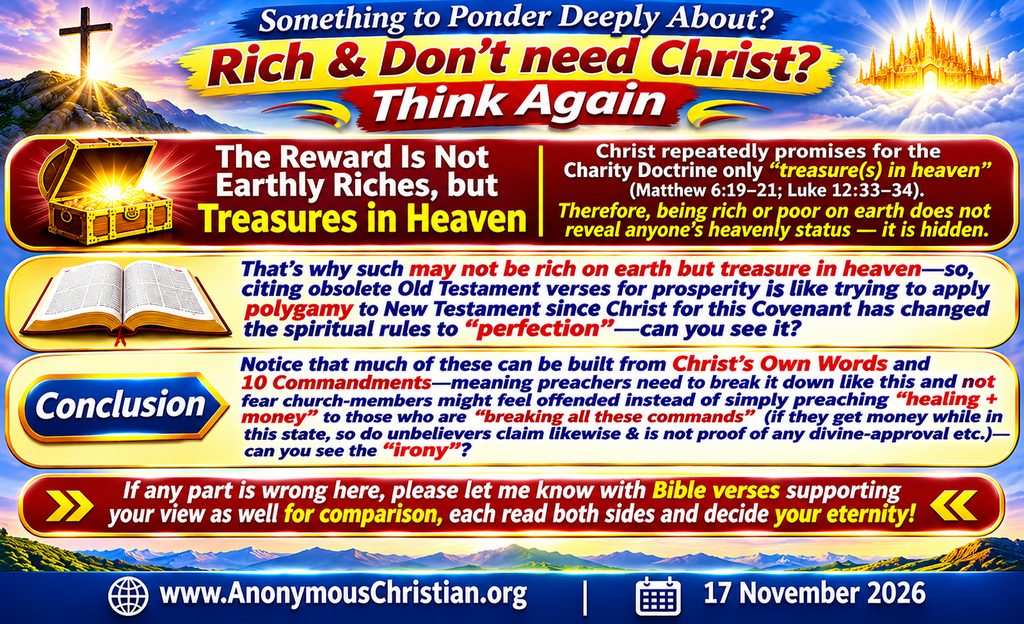
Opposite common error, especially in some Prosperity Gospel views: this reading cautions against making material abundance the normal evidence of answered prayer. I am not using Old Testament prosperity passages as unconditional guarantees for Christians today; those passages are not obsolete, but must be interpreted in context. Deuteronomy 17:15–18 itself points out that even at the “king’s level,” kings should not multiply wives or accumulate excessive gold and silver, even back then.
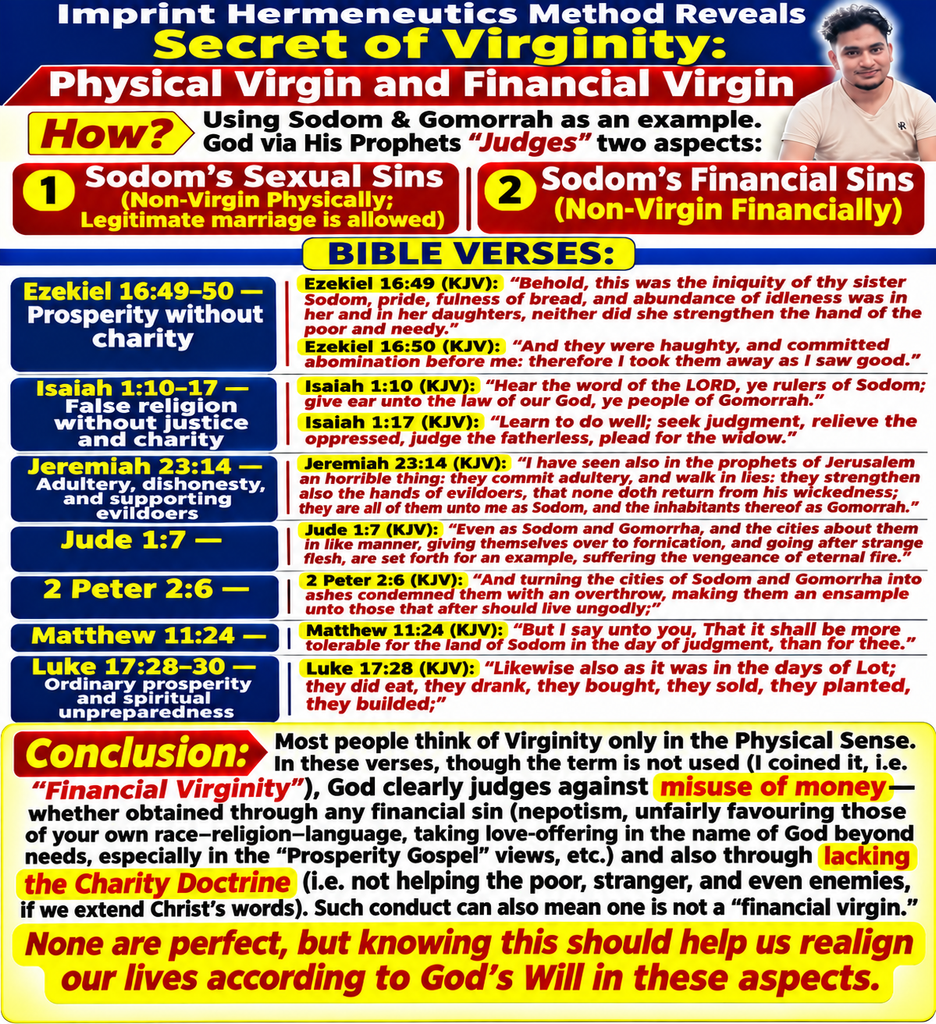
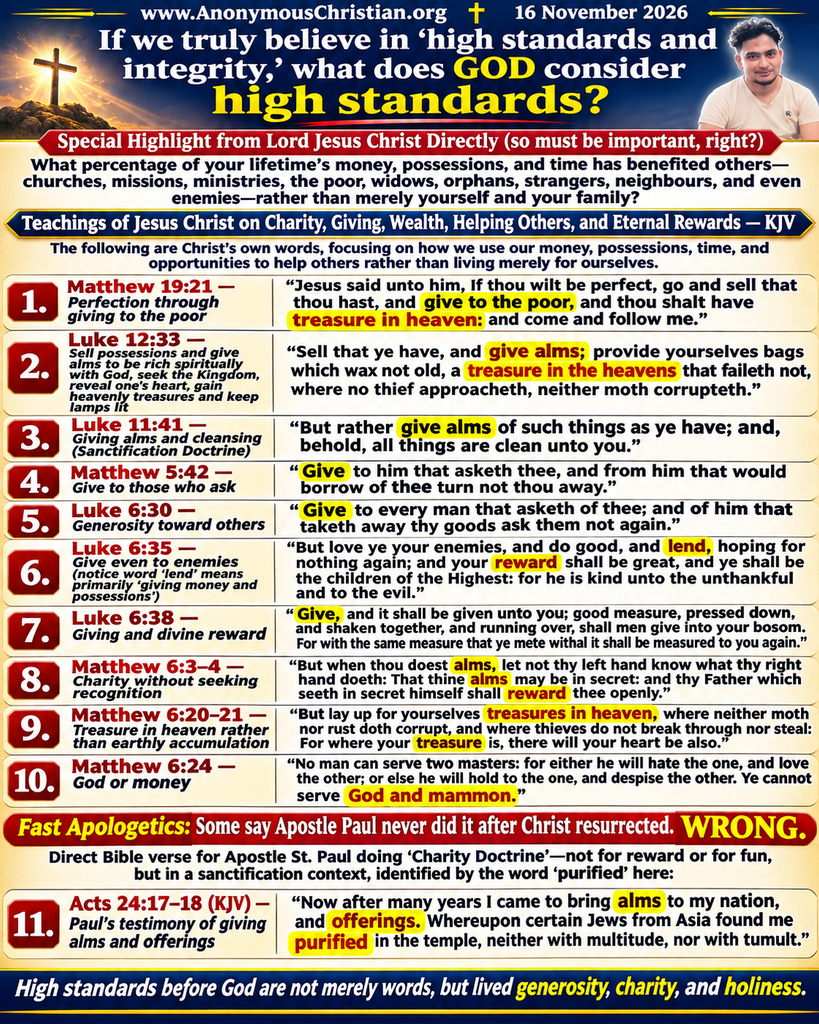
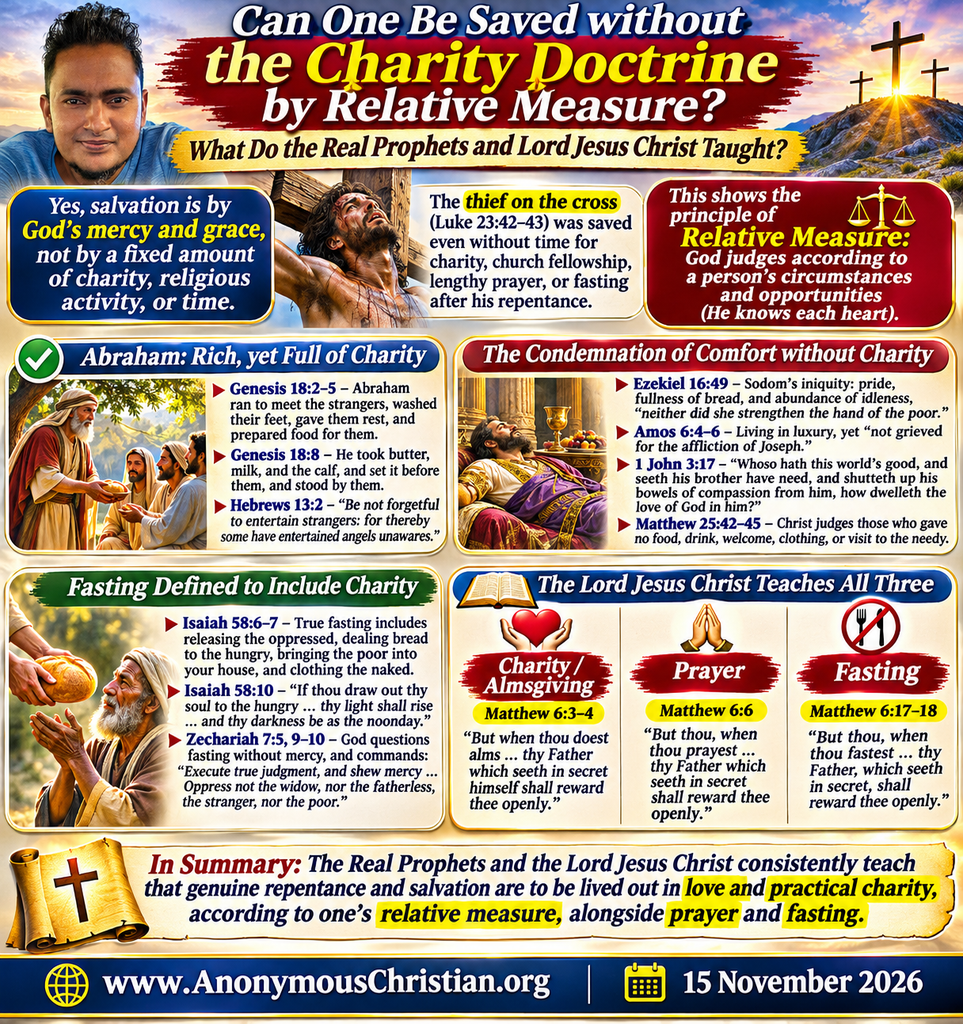
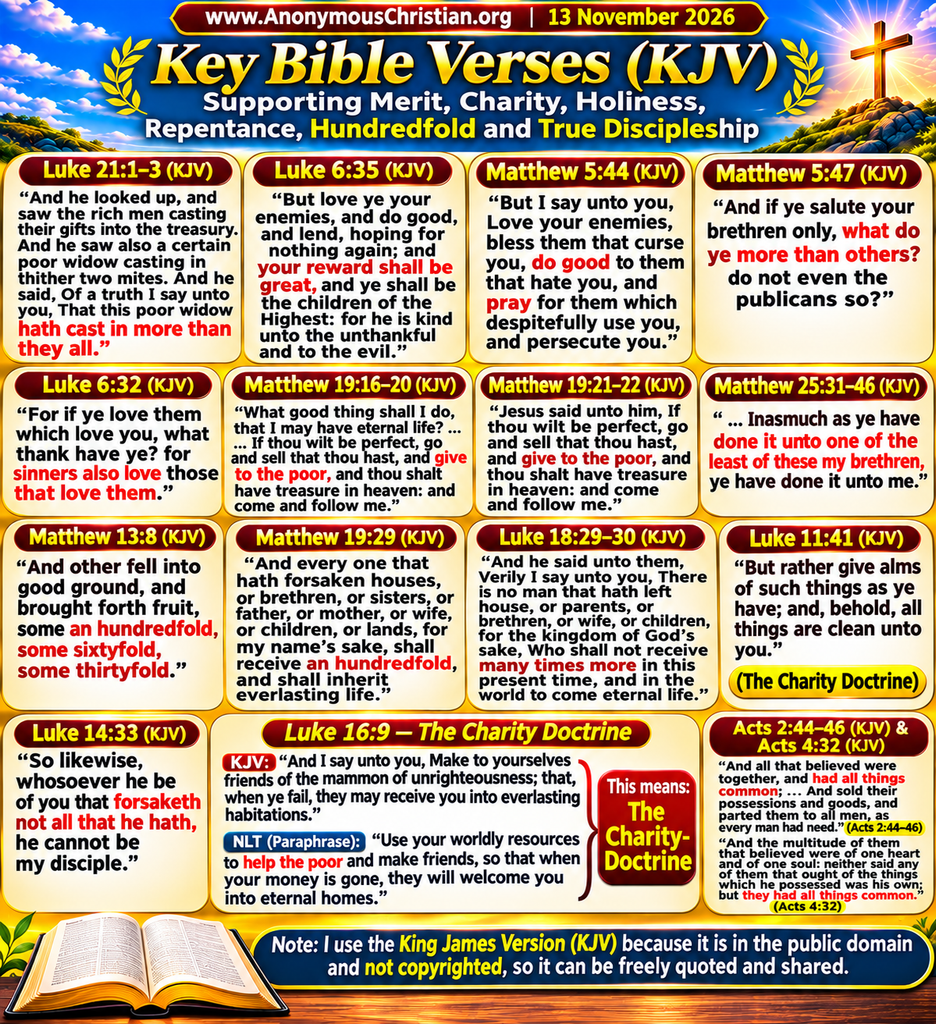
Christ raised the bar by calling the rich man to perfection through giving to the poor (Matthew 19:21). I describe this as the ideal of “penniless Charity Doctrine,” a proposed term for radical generosity rather than a mandatory rule for every Christian. We should emulate Christ’s call in whatever small way we can, with attention to our responsibilities. One can even give a greater percentage through a will at the end of one’s life, if able to do so.
My point: You can make your prayer requests, but a person who does not believe in Christ, or who is living in sin, can nevertheless have:
• A better job and a higher salary.
• A bigger car or house.
• A spouse whom others regard as more attractive.
• More money and luxury.
• Other material advantages.
This means that presenting such blessings as testimonies in church gatherings is not necessarily proof of the work of God or of superior spiritual faithfulness; it does not mean that every testimony is false. God will judge everything on that day regarding its legitimacy, including how much we use these blessings to fulfil Charity Doctrine by helping the poor through missions and the church, as Christ’s perfection call invites us to consider (Luke 12:30–35). This helps us examine how faithfully we fulfil this part of prayer doctrine.
Elsewhere, in 1 Timothy 2:1–4, Paul exhorts believers to pray for all people. Therefore, pray that they may be saved and that they may not be hostile to Christianity. This is a higher, selfless prayer request, in the sense of extending care beyond ourselves, not a way of judging the hidden motives of others.
4) Praying in Tongues — Praying With Understanding Is Better Than Unknown Words in the Context Described
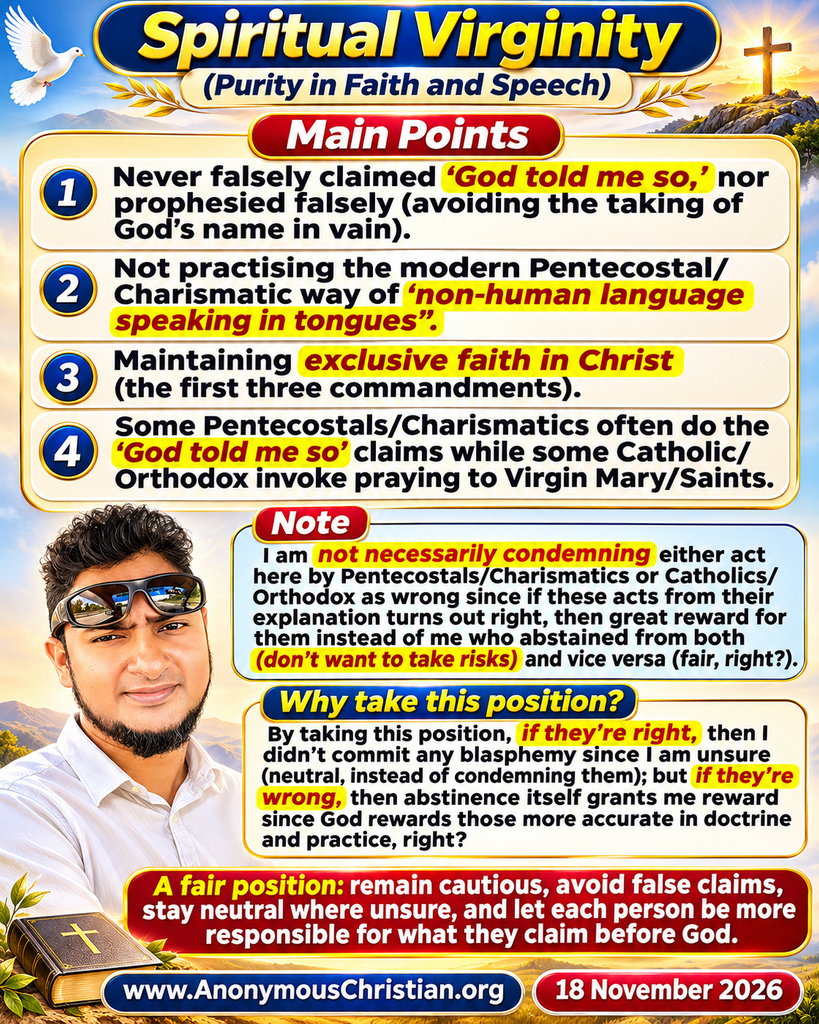
Praying in tongues (the real type) is good. However, I refrain from modern Pentecostal or some Charismatic forms of non-human-language tongues because I am not sure whether particular examples are real or whether people simply assume they are real. This expresses personal uncertainty, not condemnation of Pentecostal or Charismatic believers.
Nevertheless, even the Bible affirms a higher way for intelligible speech in the gathered church: praying with actual words and understanding has particular value in the context described.
1 Corinthians 14:15 (KJV)
“What is it then? I will pray with the spirit, and I will pray with the understanding also: I will sing with the spirit, and I will sing with the understanding also.”
1 Corinthians 14:19 (KJV)
“Yet in the church I had rather speak five words with my understanding, that by my voice I might teach others also, than ten thousand words in an unknown tongue.”
My point: Are you able to pray using only understandable words, without non-human-language tongues? Even if I do not pray in tongues at all (the real gift that God gave to certain believers), the verse does not say that I am spiritually inferior because of it.
Rather, it seems to praise a person who prays with “understanding” rather than relying only on “unknown” words, suggesting that understandable prayer is better in the context described. More precisely, Paul’s comparison in verse 19 is about speech that instructs others in church, not an absolute ranking of every form of private prayer. My proposal does not denigrate genuine spiritual gifts (1 Corinthians 12:29–30).
5) Prayer and Fasting Are Only “Perfect” With Alms (Charity Doctrine) — a Proposed Moral Principle
This is shown in the angelically directed conversion account recorded in the Acts of the Apostles, concerning Cornelius.
Acts 10:2 (KJV)
“A devout man, and one that feared God with all his house, which gave much alms to the people, and prayed to God alway.”
Acts 10:4 (KJV)
“Thy prayers and thine alms are come up for a memorial before God.”
My point: Are our alms as great or as abundant as our words of prayer? (Remember Luke 21:1–3, with the account continuing in verse 4, where the widow’s giving is considered relative to her means.)
The Cornelius narrative joins prayer with almsgiving; it does not provide a mathematical test of the “perfection” of every prayer. I propose instead that habitual prayer and fasting should not be disconnected from the duty of practical mercy.
Conclusion: Are We “Prayer Virgins”?
In light of all these teachings, are we “Prayer Virgins,” or at least close to becoming so, by abiding by all these New Testament doctrines concerning perfect prayer? The expression is a proposed moral analogy, not a biblical title or a means of declaring the heavenly rank of any person.
Deepest Question
Would you, or to what extent would you, sacrifice:
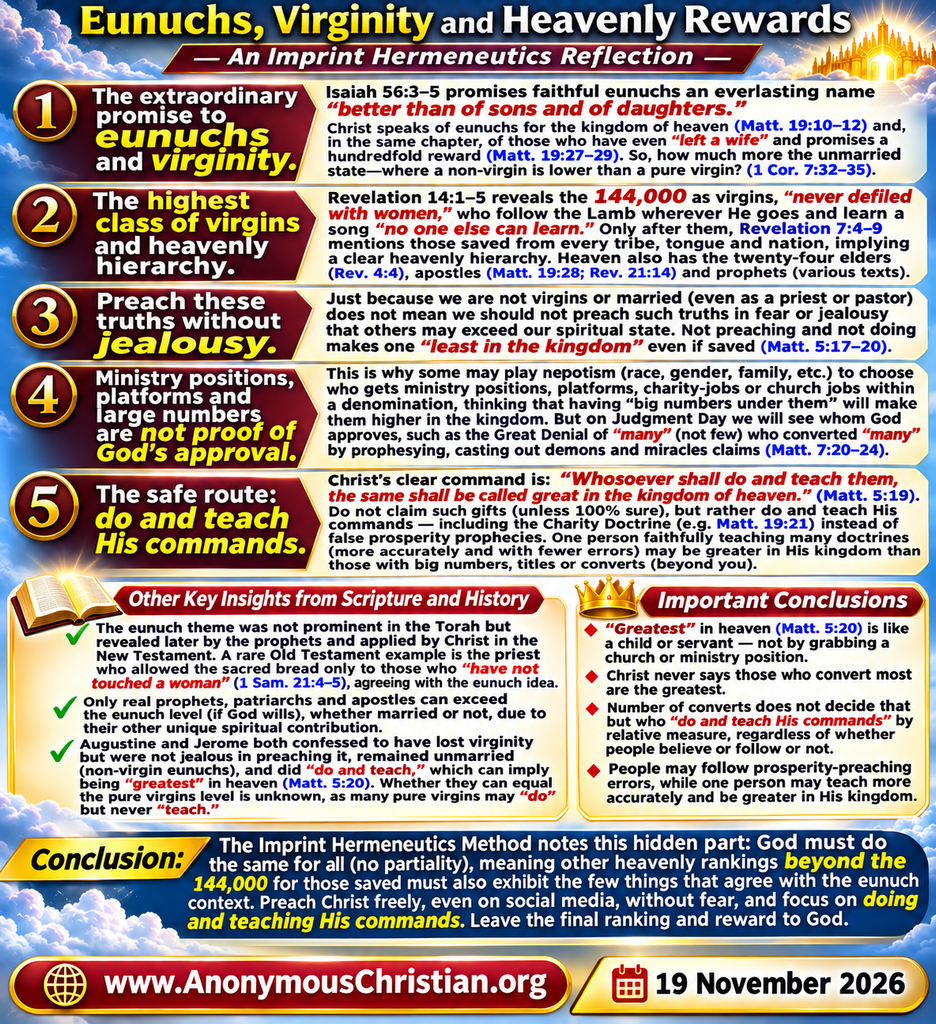
1. Marriage: Remaining unmarried, either as a virgin or as a non-virgin, repentant “eunuch” for the kingdom, for the sake of prayer and devotion to God—where this is genuinely one’s calling and not a rejection of the goodness of marriage?
2. Nice food: Practising fasting for prayer, sacrificing pleasurable food and comfort where this is appropriate and responsible?
3. Self-centred prayer requests: Praying for the salvation and well-being of people beyond yourself and your family, including unknown others and even enemies?
This stands in contrast to some Prosperity Gospel approaches to prayer. Instead, pray with contentment in mind. The greatest faith, therefore, is not determined by whether a prayer request is fulfilled. Rather, it is “being content regardless” while living in moderation. This is my proposal for spiritual self-examination, not a claim to know the final ranking or motives of other believers.
4. Prayer with understanding: Do we pray using understandable words, which, in the context described in 1 Corinthians 14, better serve the understanding and instruction of others than uninterpreted tongues?
5. Charity Doctrine: Last but not least, is our Charity Doctrine as great as our prayer and fasting throughout our lives, especially when we do not receive much in return, remembering the promise of heavenly reward?
This means remaining “faithful regardless of whether our prayer requests are answered,” which I propose represents the highest faith, as a theological proposal rather than a demonstrated ranking of believers. We follow Christ, who provided for others’ needs but did not seek material benefits for Himself. All these practices aim toward the ultimate purpose of prayer: a closer relationship and greater intimacy with the Lord Jesus Christ, apart from other benefits and rewards in heaven.
Self-Examination
Are we really “Prayer Warriors” throughout our lifetime of prayer, in light of all these New Testament verses concerning “Virginity in Prayer Doctrine”? Or do we “skip” these teachings and follow “our own ways” instead? This is a question for personal self-examination, not a judgment on other Christians.
Source of the author’s reflection: www.AnonymousChristian.org, 20 November 2026.
Original LinkedIn Article Link:
Other book proposal or article commendations:
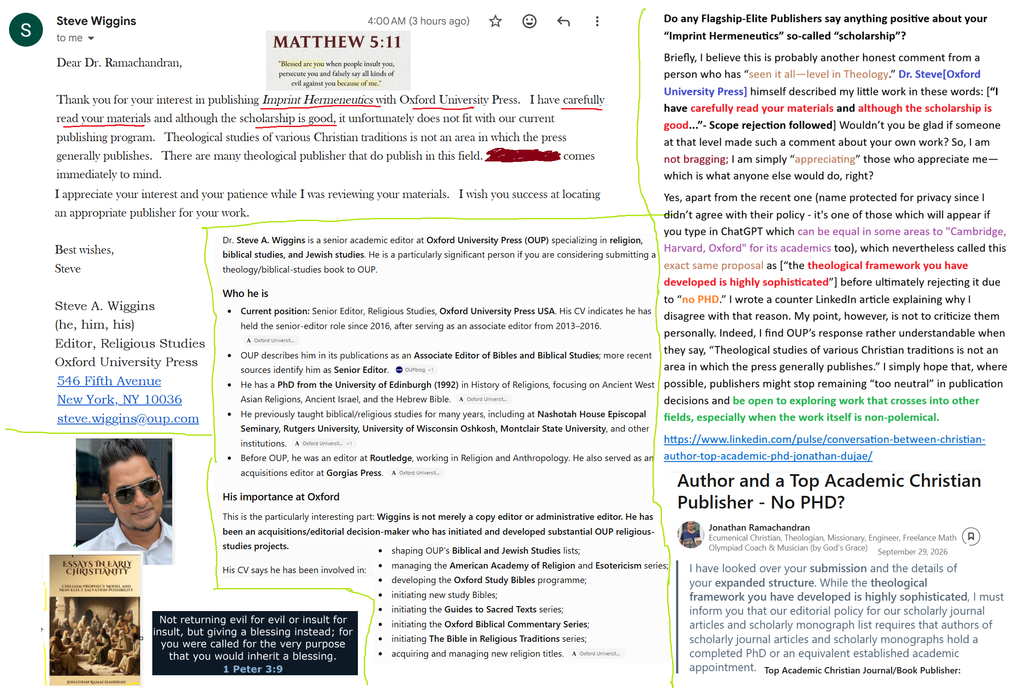
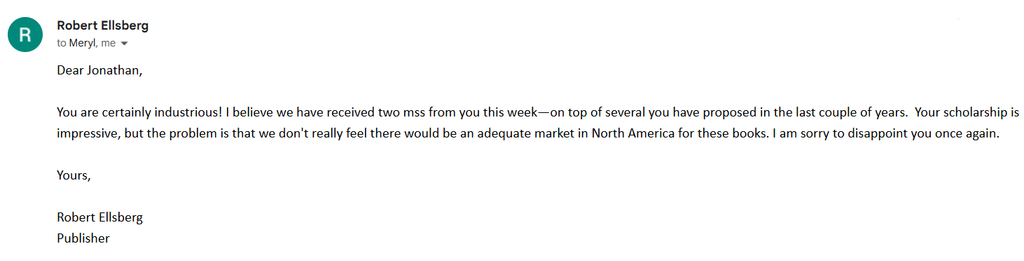
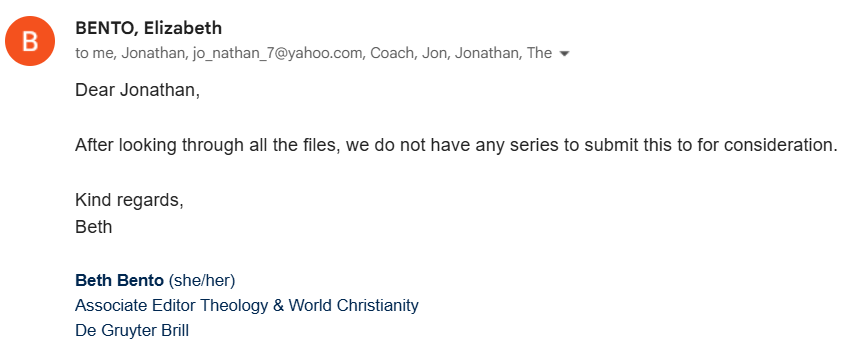
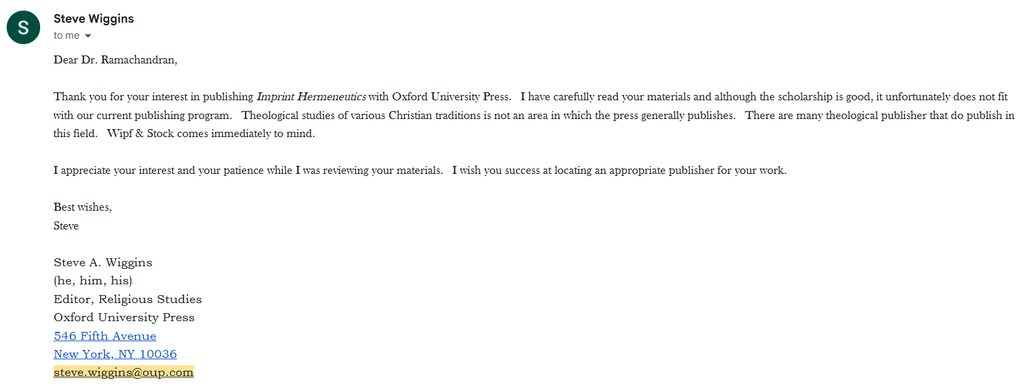
Original book proposal commendations:
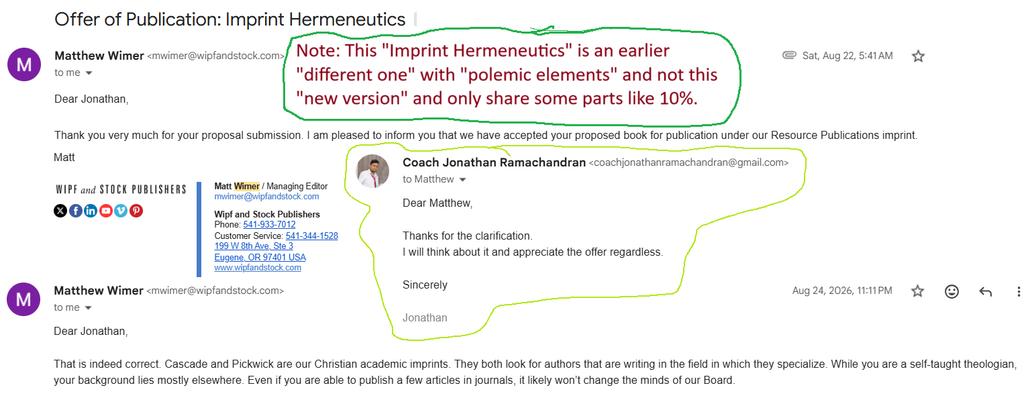
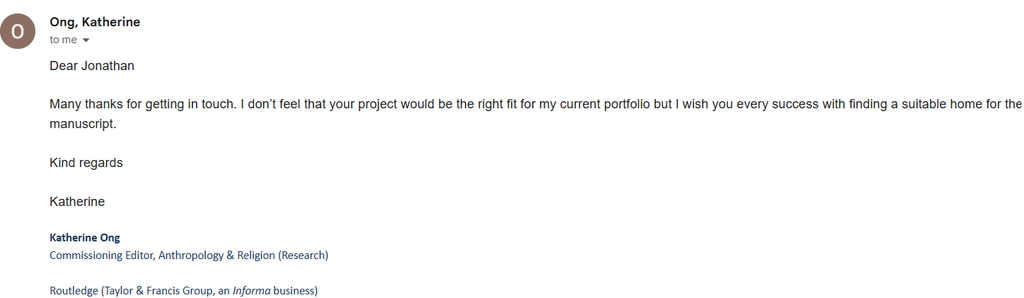
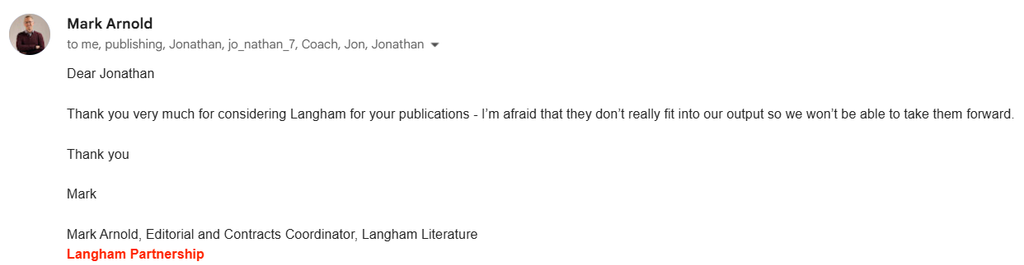
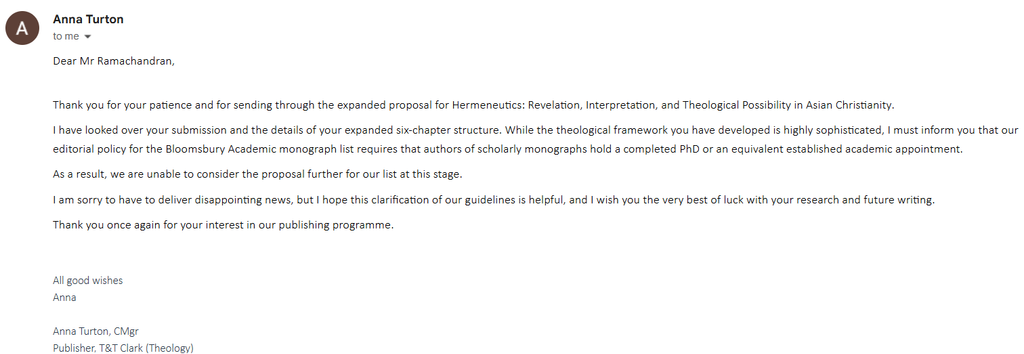
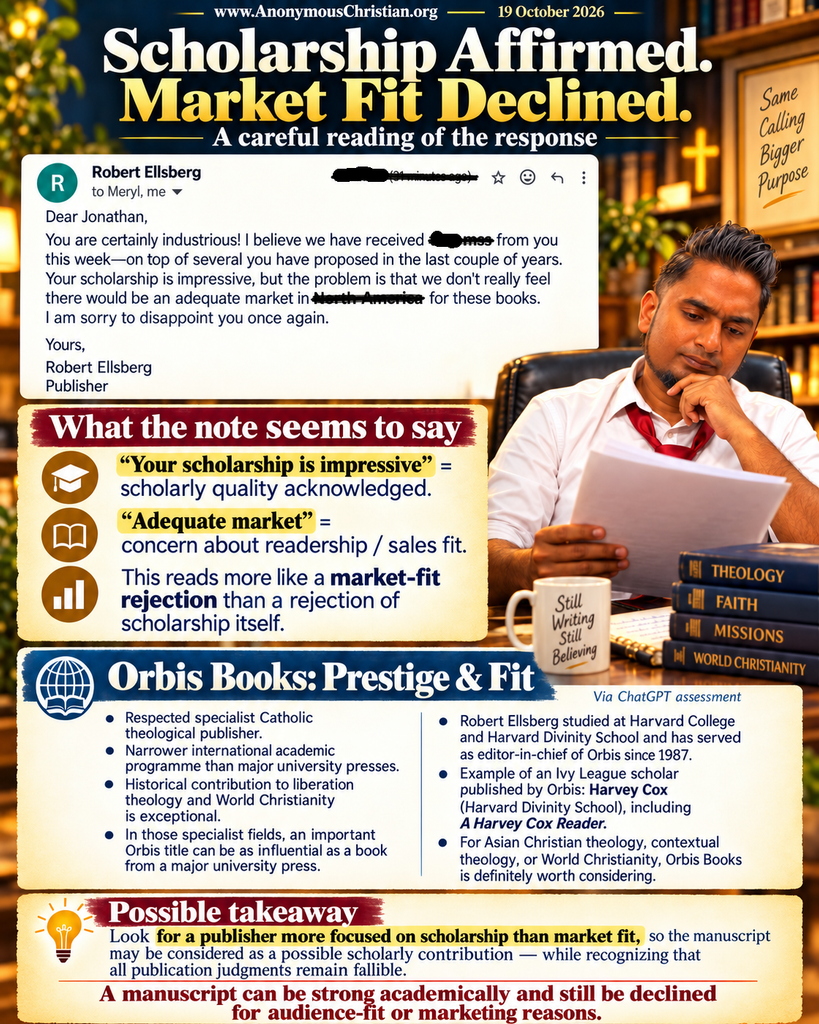
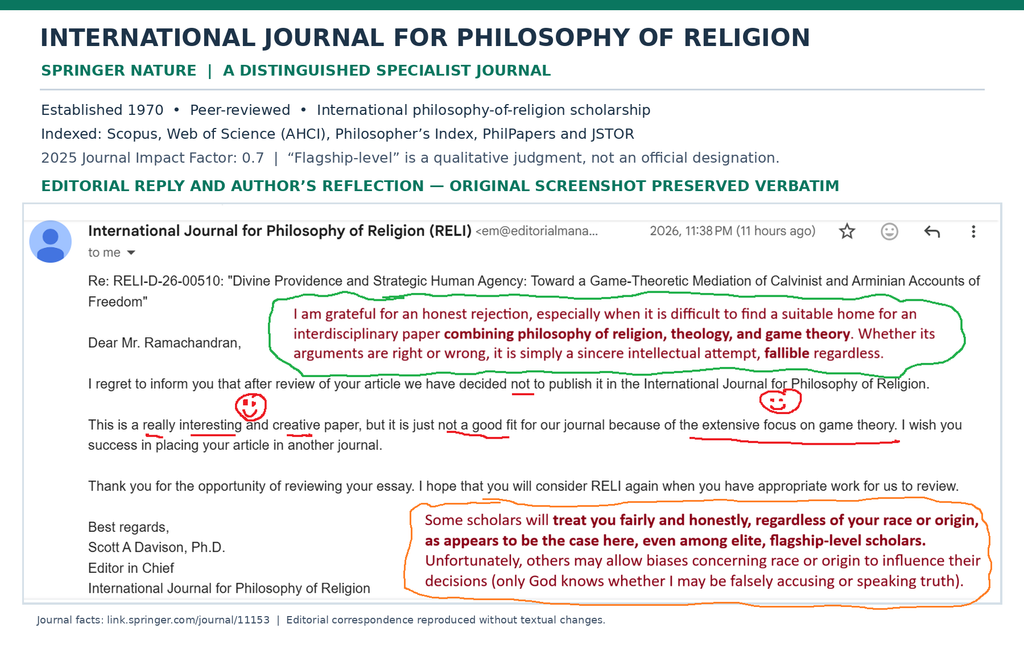
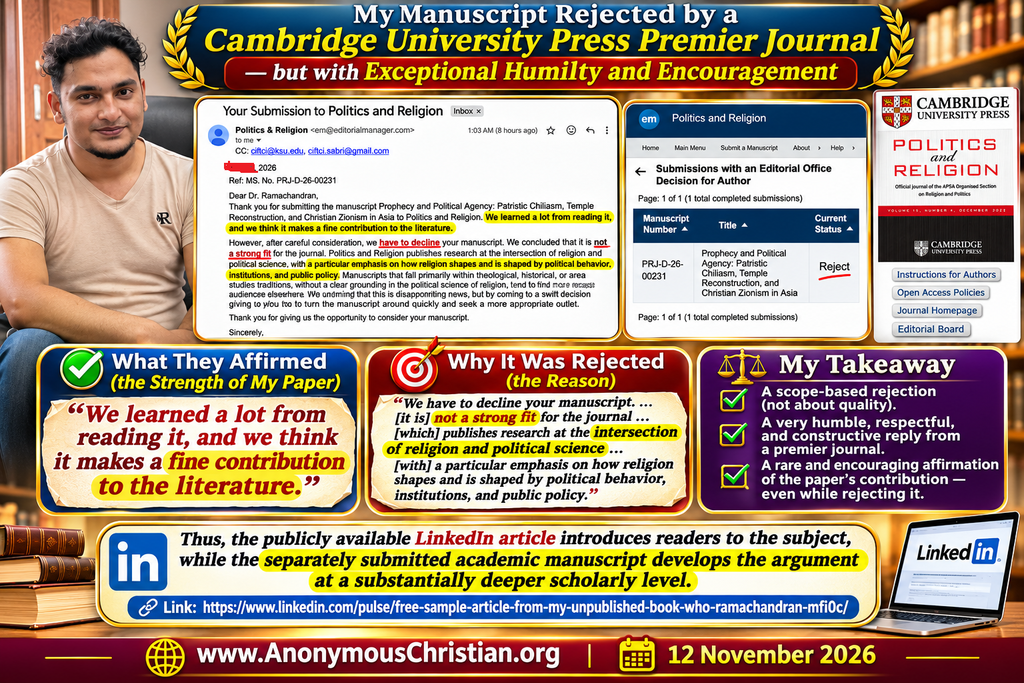
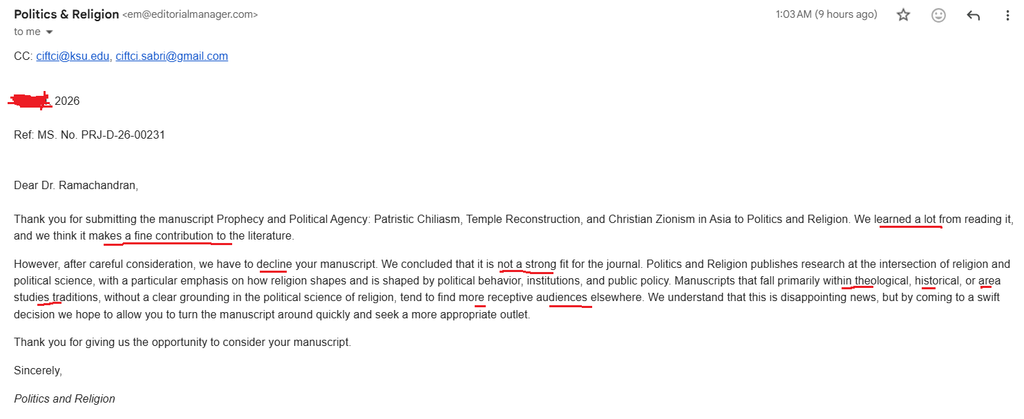
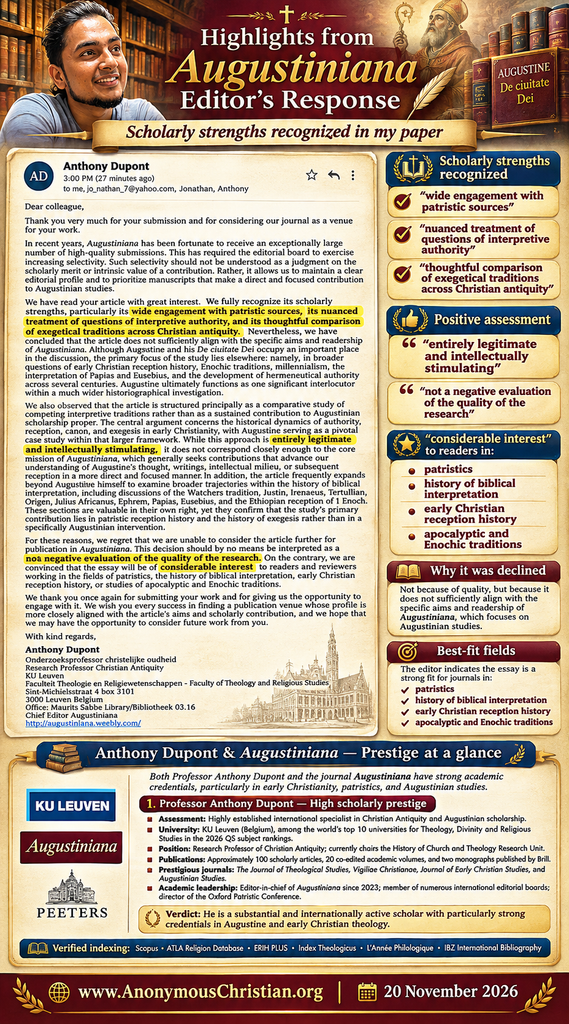
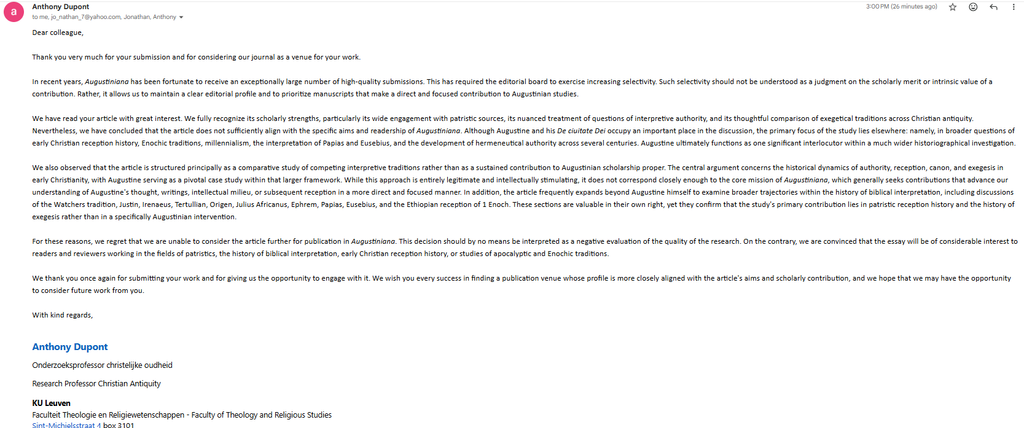
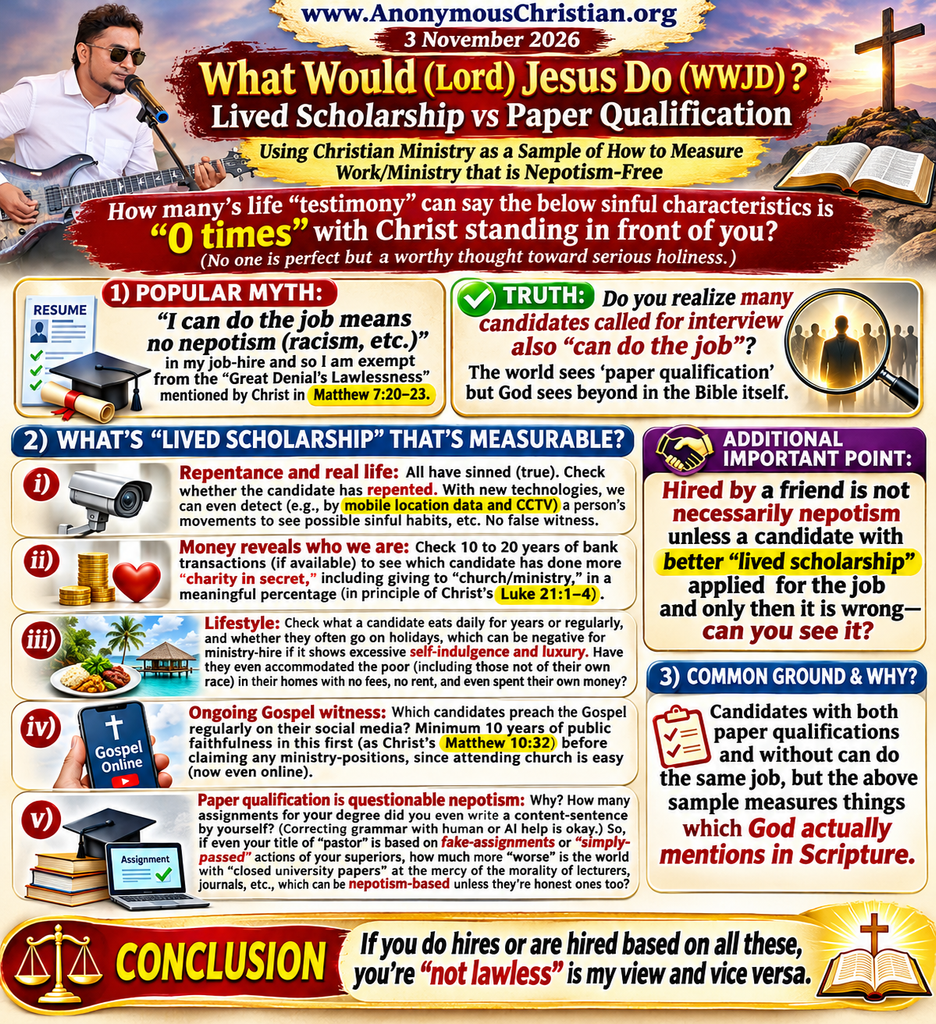
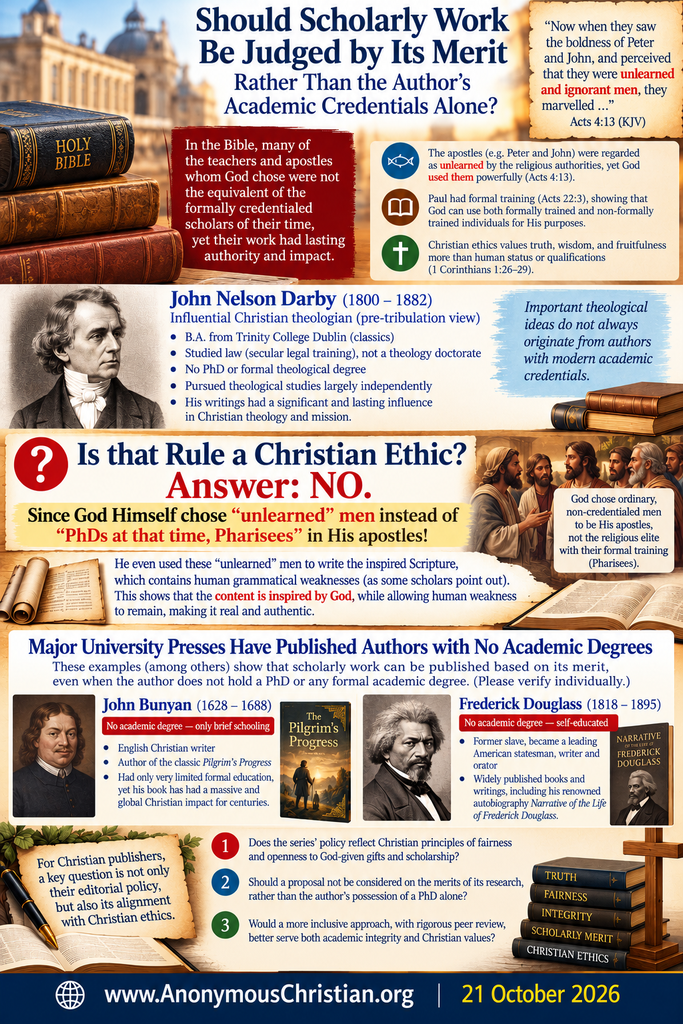
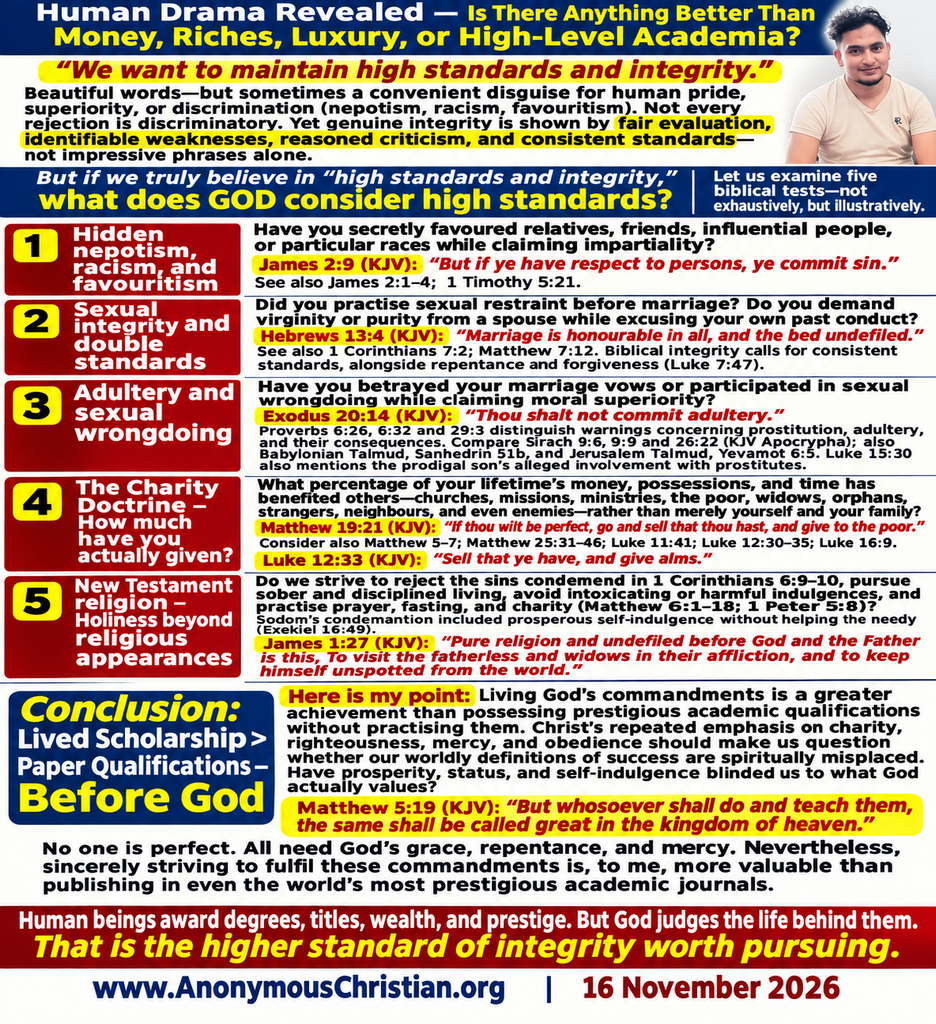
[Text] No PHD, No Masters, No Bachelors, No Diploma, so what? I find it curious that two pastors associated with exceptionally large churches—David Yonggi Cho of Yoido Full Gospel Church in Seoul and Joel Osteen of Lakewood Church in Houston—have no PhDs, master’s degrees, or elite graduate theological qualifications. Cho received formal Bible and Pentecostal ministry training at Full Gospel Bible College, while Osteen did not complete a formal theological or seminary program. Neither appears to have published a scholarly journal article under his own name. Yet both have been heard and received on a scale that few graduates of elite theological or biblical institutions can remotely match in terms of ecclesial and popular influence.
I am neither supporting nor condemning this phenomenon. Consistent with my non-polemic approach, I am simply stating these facts as a curiosity: extraordinary ecclesial influence does not necessarily correspond to elite academic credentials or participation in the scholarly-journal system.
And He sent him a portrait of:
“Death itself being defeated … by the Lord Jesus Christ.”
About this article author:
Jonathan Ramachandran is an ecumenical Christian, a Malaysian theologian, missionary blogger, and operations manager who bridges mathematics and ministry. A self-taught enthusiast of Chiliasm Church Fathers, he has published in peer-reviewed journals and runs www.AnonymousChristian.org. He is an International Mathematical Olympiad (IMO) coach for Malaysia, guiding students in advanced competition mathematics. A graduate in actuarial science and Bank Negara scholar, his professional path spans seismic engineering, education, charity, and freelance preaching, including baptizing students into Christianity . He holds honorary doctorates in theology, divinity, and ministry, dedicating his life to scholarship, service, and mathematical coaching. Education: B.Sc., Th.D. (Hon.), D.Div. (Hon.), D.Min. (Hon.)
Bsc. Actuarial Science (National University of Malaysia, 2006) with Honors.
Dr. Jonathan Ramachandran obtained his Honorary Doctor of Theology (Th.D.) from University of Jerusalem (UJ, Chennai, India, 20 August 2025; Reg. No.: 11230), Honorary Doctor of Divinity (D.Div.) from Triumphant Christian University of America (TCUA, Illinois, USA, 20 August 2025, Cert. ID.: 7704247) and Honorary Doctor of Ministry (D.Min.) from Open Christian University (OCU, California, USA, 31 August 2025, Cert. ID.: OCU250124/831208-14-6517MY).
Works & Links:
Ramachandran, Jonathan. Anonymous Christian. Accessed October 30, 2025. https://www.anonymouschristian.org/
Ramachandran, Jonathan. Coach Jonathan Ramachandran (Facebook Pages). https://www.facebook.com/CoachJonathanRamachandran/, or https://www.facebook.com/profile.php?id=100057109853813, or https://www.facebook.com/profile.php?id=100070978834712
Ramachandran, Jonathan. Defense of Honorary Doctorates. Accessed October 30, 2025. https://drive.google.com/file/d/1dLffkOnLe8BPz9vd3RMPbhZmn6puY7op/view?usp=sharing
Ramachandran, Jonathan. Elementary School Math Olympiad Facebook Links. Updated October 26, 2025. Problems 1–264, https://www.facebook.com/jonathan.ramachandran/posts/pfbid0wkPqT9UULb6G4x1qRVRceBzqARRuWajpKdeVT7d2YfGkD28z7hcqB7yvMFRE3Wpal; Website listing, https://www.anonymouschristian.org/blog/elementary-school-math-olympiad-facebook-links/
Ramachandran, Jonathan. Essays in Early Christianity: Chiliasm Prophecy Model and Non-Elect Salvation Possibility. Cambridge, OH: Christian Publishing House, 13 July 2025. ISBN 978-1949586435. https://www.amazon.com/dp/1949586421.
Ramachandran, Jonathan. Free High School Math Olympiad: 546 Problems & Solutions. 5 Loaf 2 Fish Publications, May 28, 2026. https://books.google.com.my/books/about?id=eaHdEQAAQBAJ or https://drive.google.com/drive/folders/1d0go0yKivMwt7mseVcJucot_E56h1po7?usp=sharing.
Ramachandran, Jonathan. High School Math Olympiad Facebook Links. Updated October 26, 2025. Problems 1–340, https://www.facebook.com/jonathan.ramachandran/posts/pfbid0AwdYEToSrX8B2W1KJyzuKoCyWv3VXAHPAtt5bSfwd3tF2oMEbnmgwCoacyPxczppl; Problems 341–545, https://www.facebook.com/jonathan.ramachandran/posts/pfbid0hJeHxUuJp5kRwWJQ5QFhoNPS4Ym2mmh3ciei2nctqsThbNhWuTAJYvRzk3AU5APil; Website listing of Problems 1–545, https://www.anonymouschristian.org/blog/high-school-math-olympiad-facebook-links/
Ramachandran, Jonathan. Hope Beyond the Elect: Revisiting Early Christian Views on Prophecy and Salvation. Cambridge, OH: Christian Publishing House, 2025. www.amazon.com/dp/1949586405.
Ramachandran, Jonathan. Jonathan’s Math Video Solutions. YouTube channel. https://youtube.com/@jonathanramachandran1537?si=oKVTC4hLTK7iRKSf
Ramachandran, Jonathan. Jonathan Ramachandran – Independent Researcher (Academia.edu profile). Accessed October 30, 2025. https://independent.academia.edu/RamachandranJonathan
Ramachandran, Jonathan. Sample CV. 14 September 2025. https://drive.google.com/file/d/19YuhL31EpC4l3JnHcbbQNio-ueogAEXQ/view?usp=sharing
Ramachandran, Jonathan. School Math Facebook Links. Updated October 26, 2025. Problems 1–154, https://www.facebook.com/jonathan.ramachandran/posts/pfbid025mCA6wGPKLJ4ERhfLBzUwooHBJez59wdhJuHnbKZ9F9ZdaDpEmvX4vinwmoNjdsUl; Website listing, https://www.anonymouschristian.org/blog/school-math-facebook-links/
Ramachandran, Jonathan. Thank God Regardless: Math, Merit, and Being Unapologetically Christian. 5 Loaf 2 Fish Publications, 2026. https://drive.google.com/drive/folders/1d0go0yKivMwt7mseVcJucot_E56h1po7?usp=sharing or https://books.google.com.my/books/about?id=3KPfEQAAQBAJ.
Ramachandran, Jonathan. “Jonathan Ramachandran – Google Scholar Profile.” Accessed October 30, 2025. https://scholar.google.com/citations?hl=en&user=Bv7IFrAAAAAJ
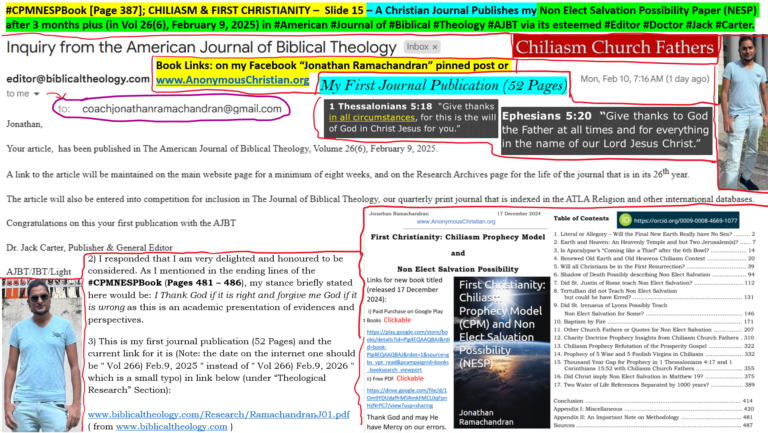
Ramachandran, Jonathan. “Non Elect Salvation Possibility.” American Journal of Biblical Theology (AJBT) 26, no. 6 (February 2025). www.biblicaltheology.com/Research/RamachandranJ01.pdf.
Ramachandran, Jonathan. “ORCID 0009‑0008‑4669‑1077.” Accessed October 30, 2025. https://orcid.org/0009-0008-4669-1077
Ramachandran, Jonathan. “The Personhood of the Holy Spirit and the Unity of the Trinity.” JOY! Magazine, theology section, April 2026. Accessed April 3, 2026. https://joygifts.co.za/product/https-joygifts-co-za-joy-april-2026/.
Ramachandran, Jonathan. “Thousand Year Gap for Prophecy in 1 Thessalonians 4:17 and 1 Corinthians 15:52 with Chiliasm Church Fathers.” Journal of Biblical Theology (JBT) 8, no. 3 (June 2025).
Ramachandran, Jonathan. “Thousand Year Gap for Prophecy in 1 Thessalonians 4:17 and 1 Corinthians 15:52 with Chiliasm Church Fathers.” American Journal of Biblical Theology (AJBT) 26, no. 22 (June 2025). www.biblicaltheology.com/Research/RamachandranJ02.pdf.
Disclaimer: If this book gets published, this free article may be “removed.” Further thoughts to ponder:
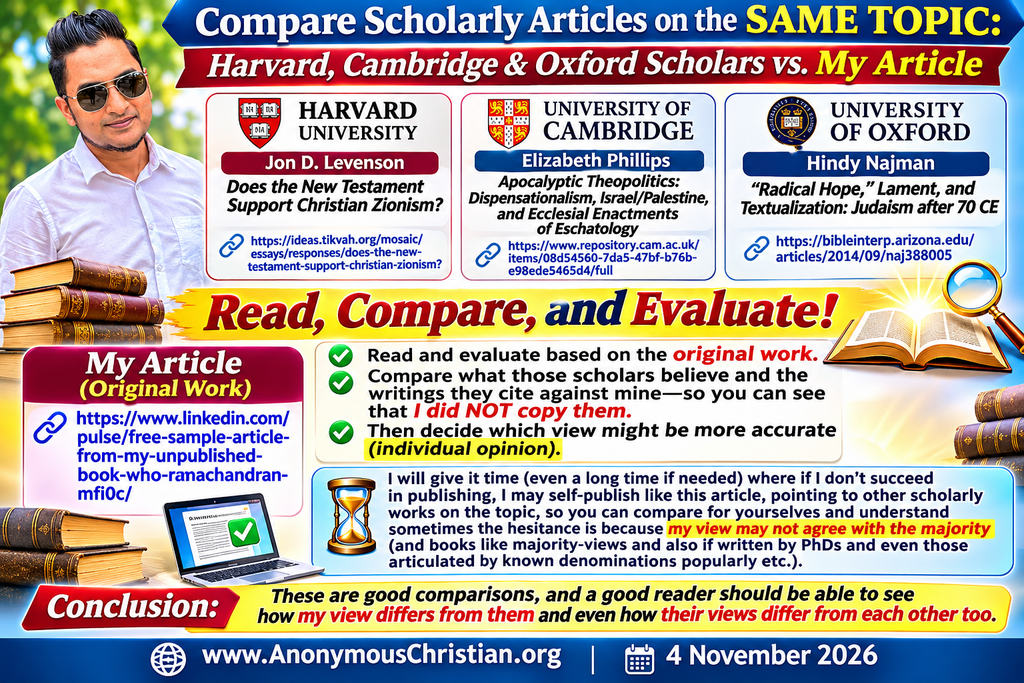
1) Harvard University — Jon D. Levenson
Levenson, Jon D. “Does the New Testament Support Christian Zionism?” Mosaic, July 20, 2020.
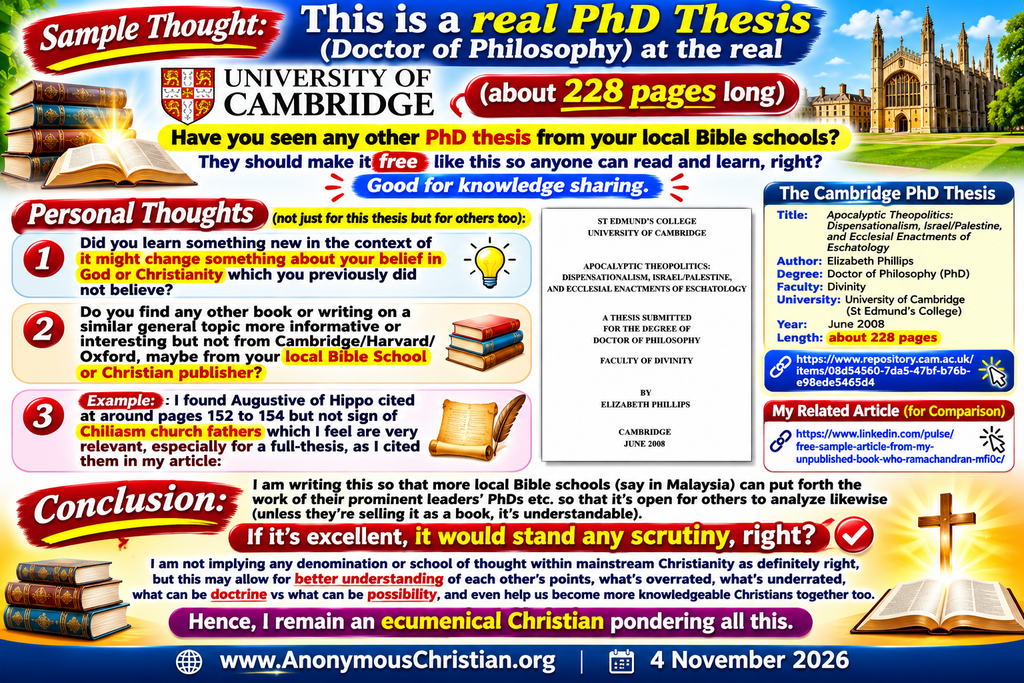
2) University of Cambridge — Elizabeth Phillips
Phillips, Elizabeth. “Apocalyptic Theopolitics: Dispensationalism, Israel/Palestine, and Ecclesial Enactments of Eschatology.” PhD diss., University of Cambridge, 2009.
URL: https://doi.org/10.17863/CAM.36146
3) University of Oxford — Hindy Najman
Najman, Hindy. “‘Radical Hope,’ Lament, and Textualization: Judaism after 70 CE.” Bible and Interpretation, September 2014.
URL: https://bibleinterp.arizona.edu/articles/2014/09/naj388005
4) Jonathan Ramachandran — Independent Christian “Chiliasm” Opinion
Ramachandran, Jonathan. “Free Sample Article from My Unpublished Book—Imprint Hermeneutics Sample: ‘Who Dares to Nuke Israel?’—Third Temple Prophecy, Christian.” LinkedIn, October 29, 2026.
URL: https://www.linkedin.com/pulse/free-sample-article-from-my-unpublished-book-who-ramachandran-mfi0c/